Raised on Windows 95, fueled by surf, adventure, and curiosity. Currently making enterprise solutions an automation.
Here you can peep some shareable cross-platform development and hands-on projects.


Raised on Windows 95, fueled by surf, adventure, and curiosity. Currently making enterprise solutions an automation.
Here you can peep some shareable cross-platform development and hands-on projects.
WhatsApp Messenger is one of the most popular instant messaging platforms worldwide. Clients are available for all major mobile operating systems, including Android, Apple iOS, BlackBerry, Windows Phone 8.x, and Windows 10 Mobile.
Due to its popularity, WhatsApp has long been a target for spammers, hoax campaigns, and cybercriminals. In some investigations, intercepted WhatsApp communications have played a key role in uncovering criminal or terrorist organizations.
WhatsApp uses end-to-end encryption, which prevents law enforcement agencies from requesting message histories directly from Meta (Facebook), the company that owns WhatsApp. As a result, data acquisition is only possible from end-user devices or from device backups, either stored locally or in the cloud.
Given the need for judicial authorities and computer forensics professionals to easily access and analyze phone conversations, I developed a tool using C++ and the Win32 API that allows decrypted viewing of WhatsApp database files.
This tool is designed as part of a larger suite capable of extracting media files and databases from a device or cloud backup, decrypting the data, and presenting it in a readable format.
As of 2025, there are no open-source solutions available for this purpose. Existing proprietary forensic tools are extremely expensive, complex to use, and not accessible to individual users or small organizations.
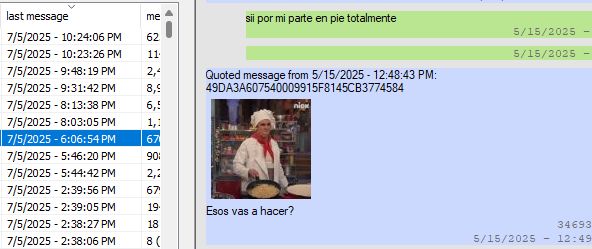
Developed a forensic tool in C++ using the Win32 API to decrypt and analyze WhatsApp database files acquired from end-user devices or backups. The tool enables investigators to access messages and media in environments where end-to-end encryption prevents server-side data retrieval.
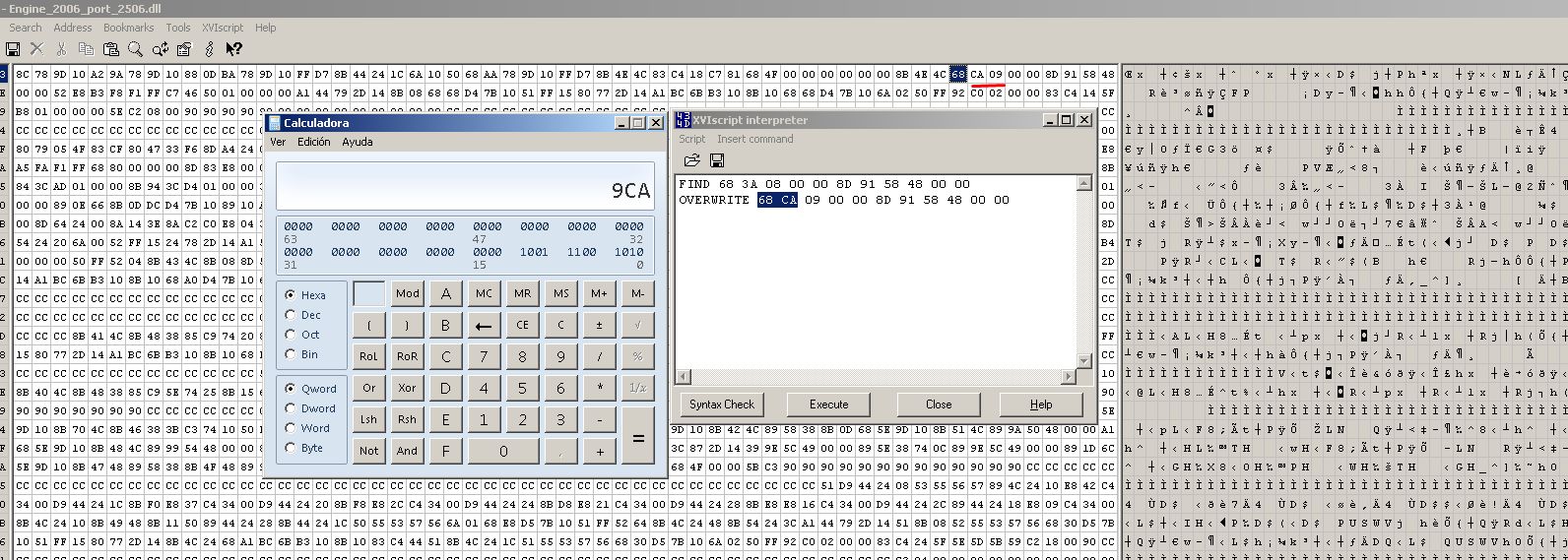
Patched a Windows C++ client library to change the hardcoded authentication port (2106) for running multiple servers on the same machine. Reverse engineered the library, found the RequestAuthLogin function, and modified the relevant bytes directly.
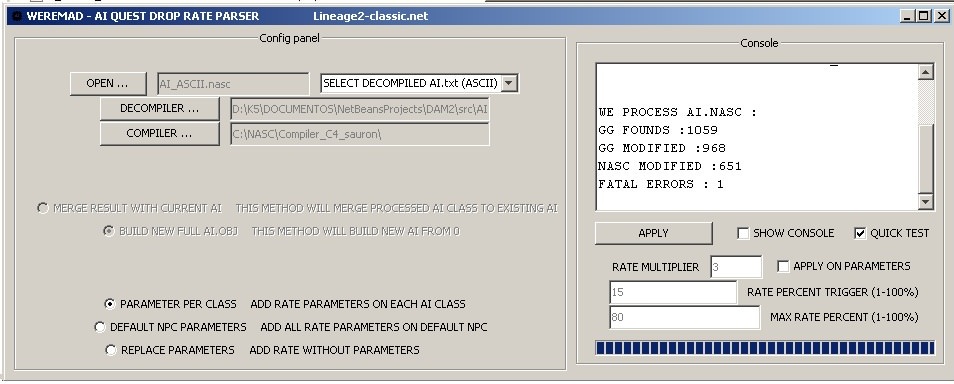
We automate mission-specific AI customization across ~6,000 C++ classes, each representing a game actor or NPC. Each class defines the actor’s behavior and mission interactions.
The tool decompiles each class, analyzes quest-related code—especially the function that calculates drop probability—and injects a parameterized multiplier. It also adjusts the item-giving function to set item quantities. Only actors relevant to a player’s active missions are affected.
Modified NASC classes are then recompiled and merged back into the AI, enabling dynamic mission parameters without manually editing compiled code.
Worked on Unity projects implementing behavior scripts for objects and setting up methods to manage interactions via Unity event handlers.
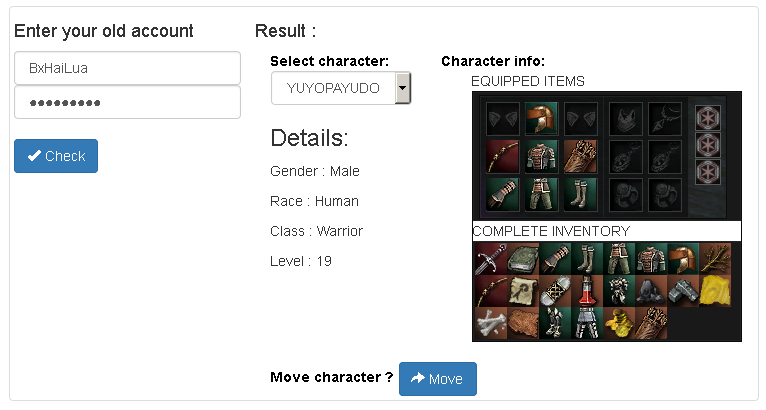
Developed an online tool to transfer a character from an old server to a newer one. To keep the feature fair for players, it applies restrictions such as lowering levels and converting items to a lower grade.
Also created a Game Updater tool, a simple Windows Forms application for updating the game.
Developed an online community platform with an administration panel to: